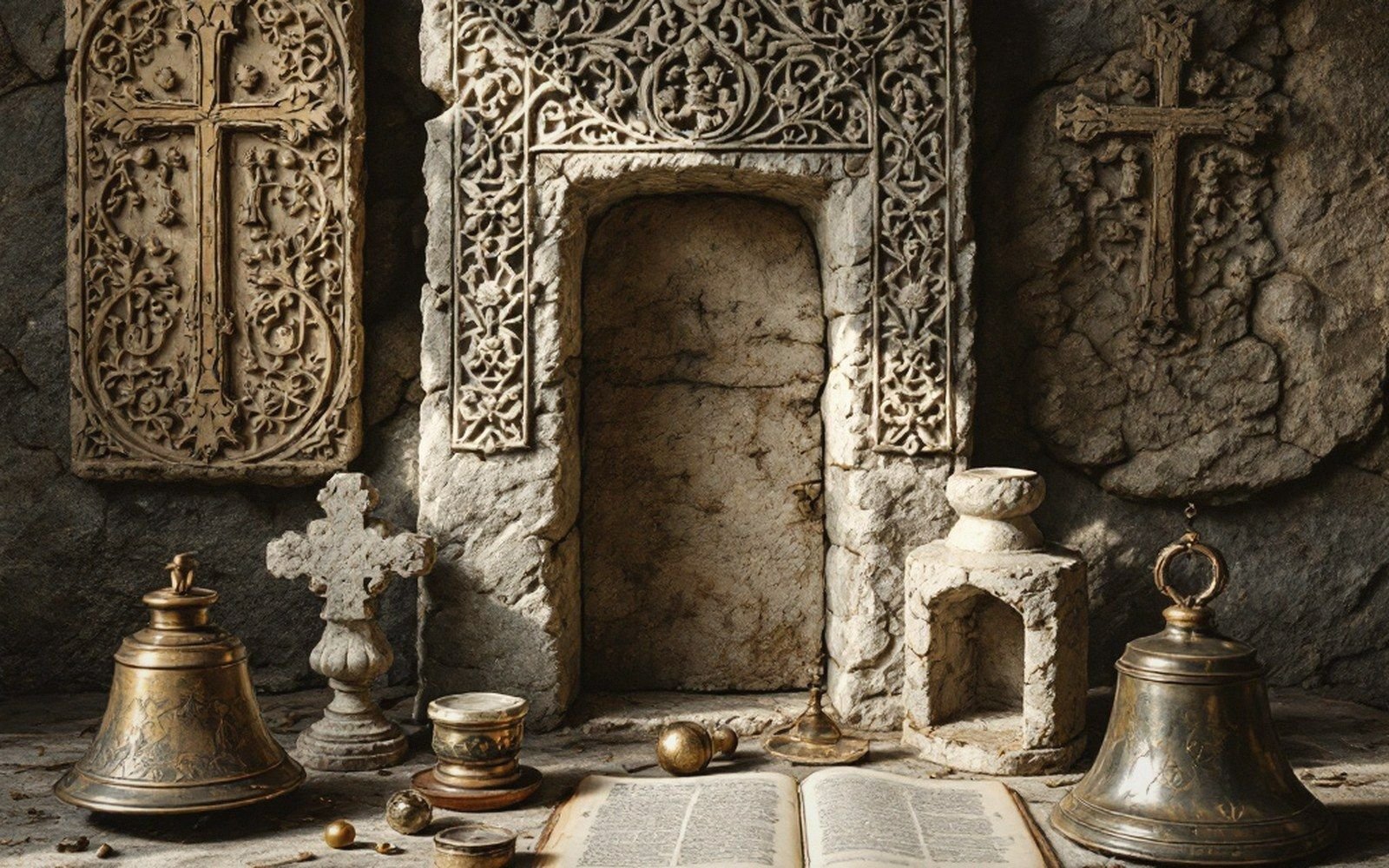
How the pieces fit
Most surviving high crosses are assemblies of three or four separate elements: a base block, a shaft, a ring-head, and sometimes a separate capstone. Cutting the whole structure from a single piece of sandstone or granite would have been technically possible for a small monument, but for anything approaching full scale — Muiredach's Cross at Monasterboice runs to roughly five and a half metres — the working and transport problems made single-stone construction impractical. The masons solved this by carving each section independently and keying them together with tenon-and-mortise joints.
The joint between shaft and base is the most legible from ground level. The shaft's lower end is dressed down to a squared tenon — a protruding tongue of stone — that seats into a corresponding mortise cut into the upper surface of the base block. Gravity and mass do most of the work; there is no evidence for metal pins or mortar in the early medieval examples. What holds the stack is the weight bearing down through fitted stone, and the sheer bulk of the base, which is typically wider and deeper than it looks from a distance.
The junction between shaft and ring-head follows the same logic but in reverse: a tenon rises from the shaft's upper end and locks into the head from below. Where the ring-head has been lost — and a great many have — the tenon is often still visible, protruding bluntly from a broken shaft. It is the most reliable clue that a headless stump was once a ringed cross rather than a plain pillar. On the question of dating a cross , the tenon dimensions and dressing can occasionally carry useful information; the technique is consistent enough that gross anomalies in a re-assembled cross can be spotted.
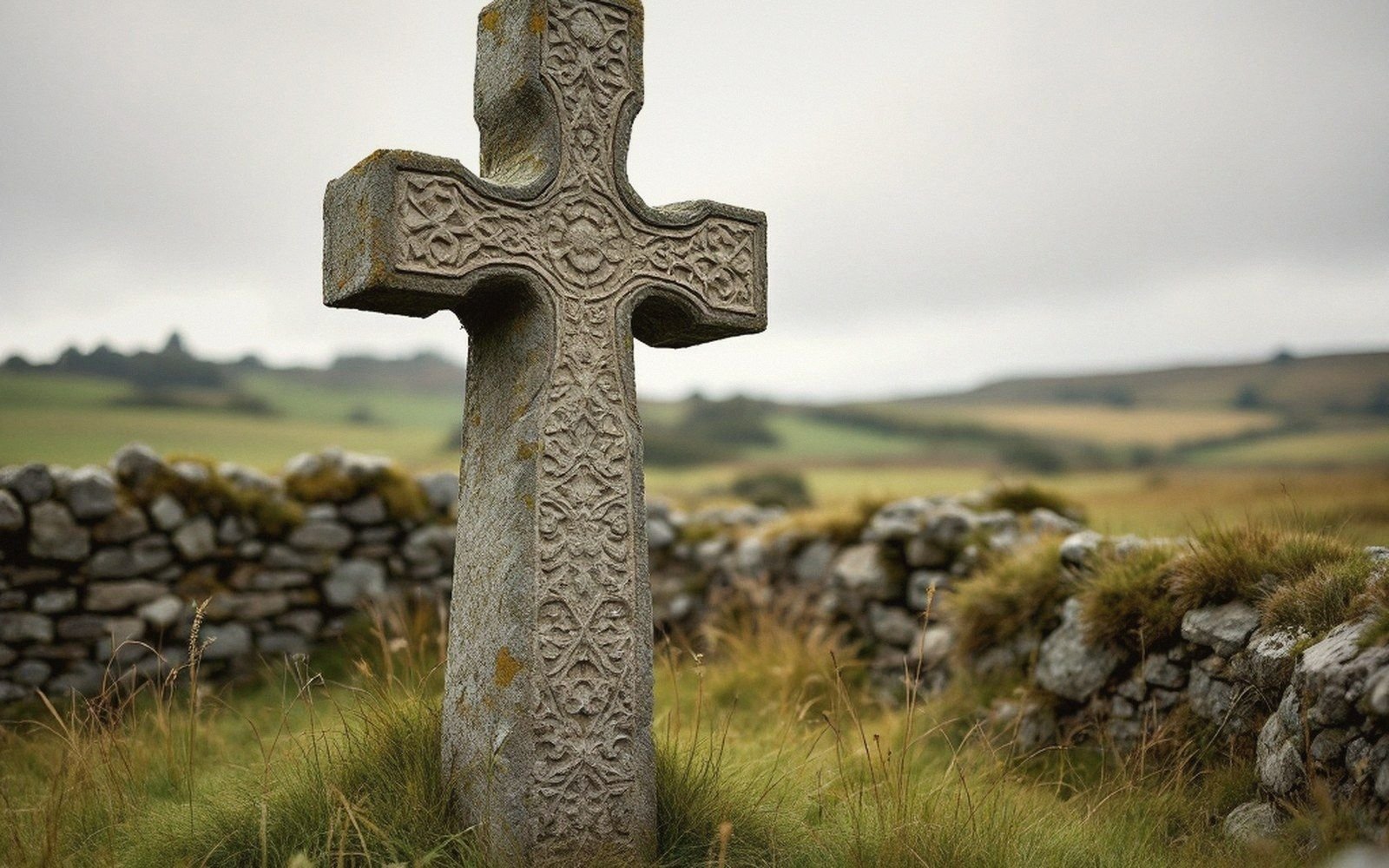
Some crosses carry a capstone above the head: a small, house-shaped or pyramidal block that sits in a shallow mortise on the ring-head's upper surface. Muiredach's Cross retains its capstone, a miniature pitched-roof form that recalls the shape of a wooden oratory. Not every cross had one; where a flat, finished upper surface survives on a ring-head, there may never have been a capstone at all.
Damage and displacement over a millennium mean that many crosses standing today are not their own components. Re-surveys at several sites have identified mismatched tenons and mortises, shafts seated in bases that were not their own original pair. The joints, in other words, are also a record of repairs, collapses and reconstructions — visible, once you know to look for them.
What to look for on the stones
- Tenon — the projecting tongue cut at the base of a shaft or the top of a shaft, designed to seat into a matching cavity
- Mortise — the socket cut to receive the tenon; visible on the upper face of surviving bases, or on ring-heads that have lost their capstones
- Capstone — a separate block, often house-shaped or pyramidal, seated on top of the ring-head; not universal
- Mismatched joints — a sign that components from different crosses, or different periods of repair, have been assembled together