How scholarship assigns dates
Inscription is the clearest route. A small number of Irish high crosses carry text that names a patron, a craftsman or an event, and where that name appears in the annals, a date range follows. But named inscriptions are rare, and the annals themselves are not always precise. Even a plausible identification leaves a margin of decades.
Style does more of the heavy lifting — and carries most of the uncertainty. Ornamental schemes on crosses evolve alongside those in illuminated gospel books and on metalwork, and comparison can narrow a cross's date within a generation or two. The distinctive animal interlace and vine-scroll of the Columban houses, for instance, clusters in the eighth and ninth centuries across several media. But workshops were conservative, regional styles persisted long after centres of innovation had moved on, and a patron could choose older-looking forms deliberately. A cross that looks archaic may simply be archaic-looking.
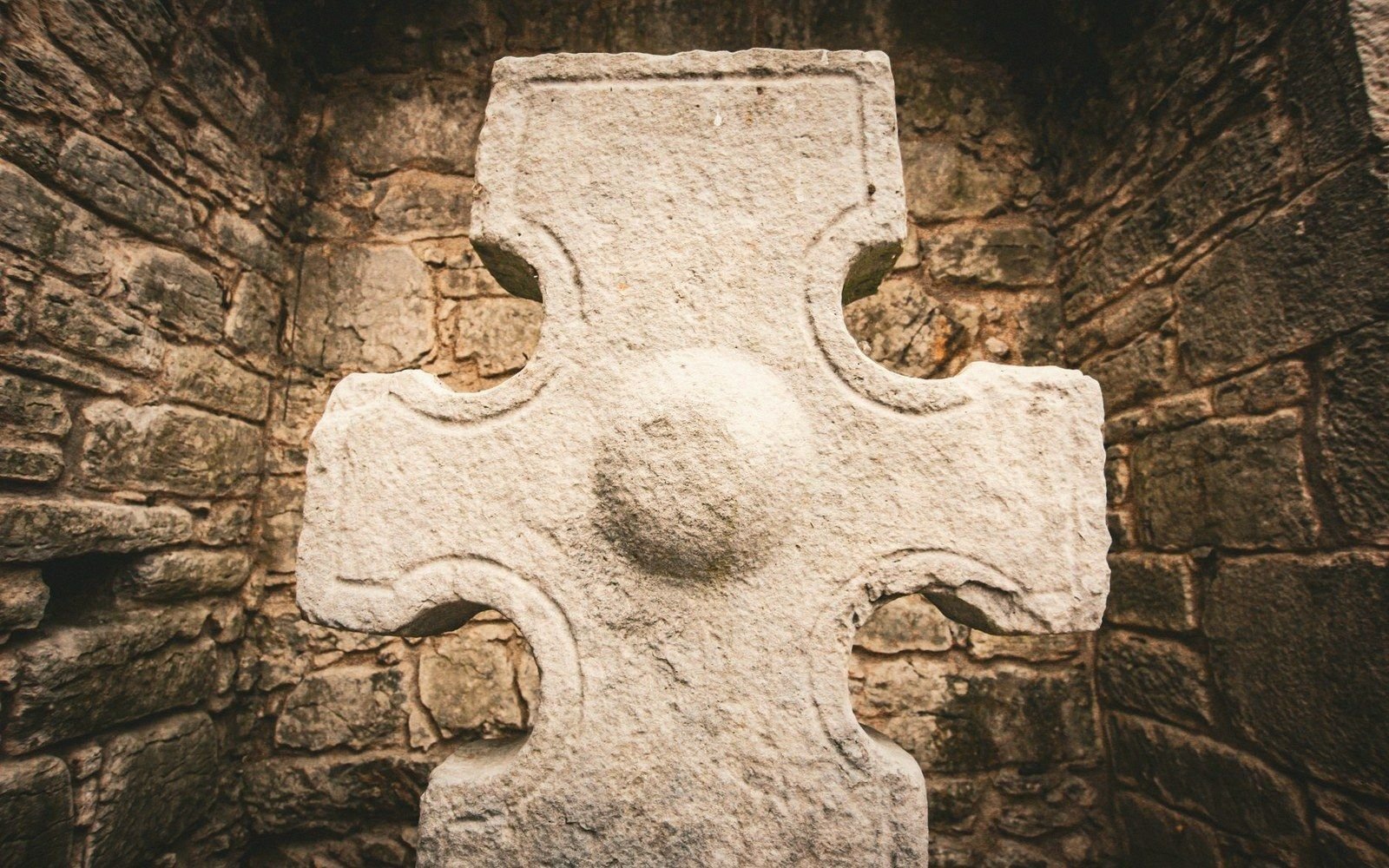
The carved figural programmes — scripture arranged as legible panels — tend to appear on crosses that post-date the plain or geometrically decorated examples, which suggests a rough developmental sequence. Crosses with no figural carving at all are sometimes placed early on this basis, though the argument risks becoming circular: a cross looks early because it lacks figures, and lacks figures because it is early.
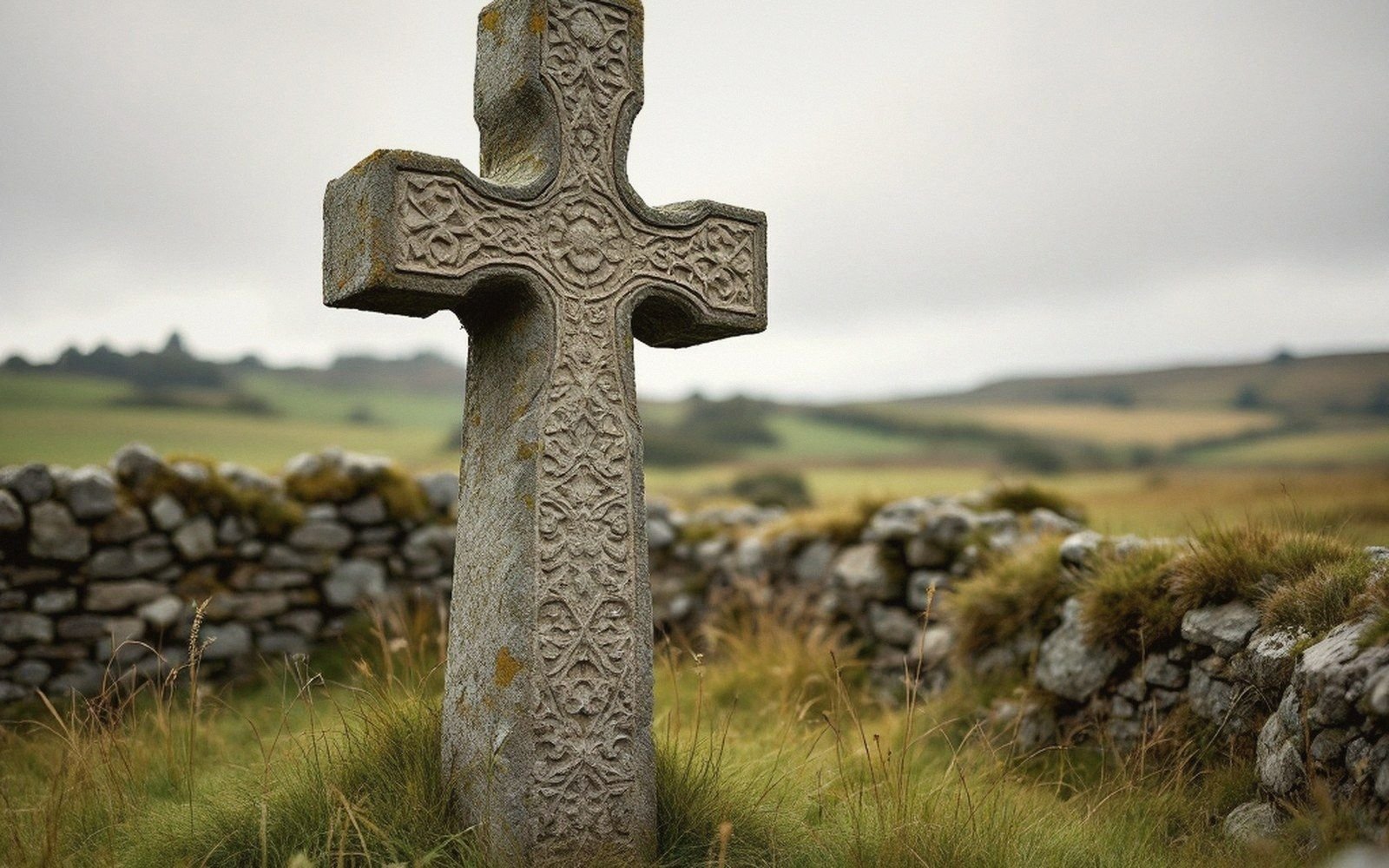
Geology helps more than it is sometimes credited. The stone source can occasionally be identified, and if a quarry fell out of use at a known point, that provides a hard terminus ante quem — though quarry histories in early medieval Ireland are themselves imperfectly documented. Weathering of the surface also feeds into dating arguments, but differential exposure, repair and the quality of individual stone beds make it unreliable as a standalone measure.
Context — where a cross stood within a monastic enclosure, and what else stood nearby — matters. A cross associated stratigraphically with a securely dated building phase gains from that association. Such stratigraphic evidence is rare: most crosses were moved, re-erected or incorporated into later structures before controlled excavation was possible.
The honest result, in most cases, is a range of fifty to a hundred years, with the most confident dates arising from an alignment of several lines of evidence rather than any single one. An inscription without stylistic corroboration, or style without contextual support, typically leaves room for a generation of revision. Scholars still disagree about the sequence of the most studied crosses in Ireland. That disagreement is the record, not a failure to read it.
Chronological markers
- Inscription naming patron or event — strongest single line of evidence; rare
- Style parallels to gospel books and metalwork — widely used; carries a margin of 50–100 years
- Figural programmes — tend to indicate post-eighth-century date; argument can be circular
- Geology / stone source — useful where quarry history is known
- Stratigraphic context — most reliable when available; usually absent