What the stone remembers
The high crosses were never designed to be permanent in any modern conservation sense. They were raised outdoors, exposed to everything, and a millennium of Atlantic weather has treated different stones very differently. The single most decisive variable is lithology — what the stone actually is.
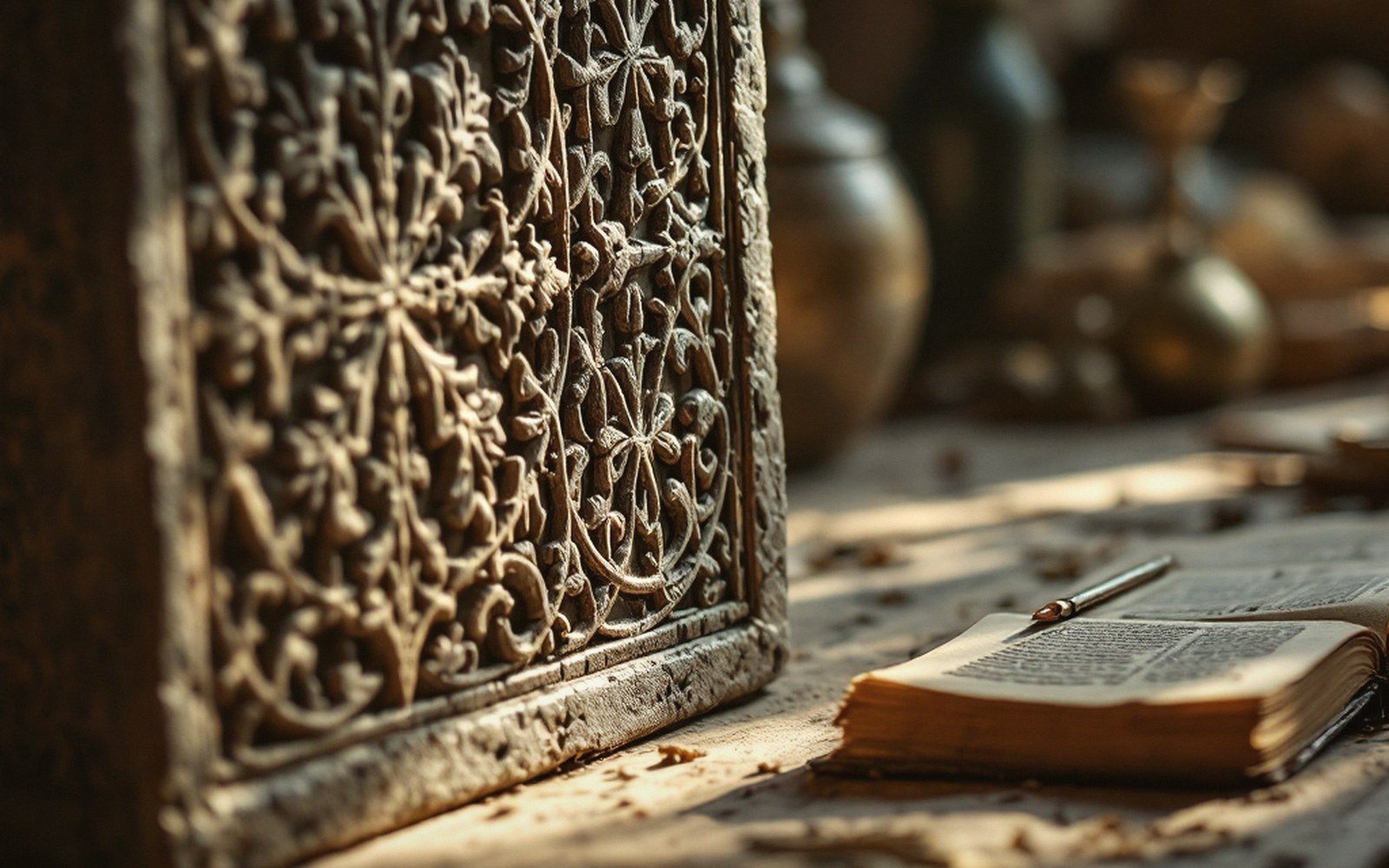
Sandstone, the material of many midland crosses including those at Clonmacnoise and Monasterboice, is porous and relatively soft. Rain penetrates the surface, salts mobilise, and freeze-thaw cycles — rarer in Ireland than in continental climates, but not absent — work the grains apart. On exposed west-facing panels the figure carving can be so reduced that what reads at a distance as a scene is, close up, almost a flat wash of texture. The same cross will often show a sheltered east face in dramatically better condition, the interlace or figural relief still crisp enough to count the strands.
Granite crosses, concentrated in Leinster, resist surface erosion far better. The coarse grain that makes granite difficult to carve in the first place also makes it stubborn against weathering; but that resistance is uneven. Where feldspar crystals decompose faster than surrounding quartz, the surface develops a granular roughness that blurs fine detail even as the stone itself holds its mass. The Ahenny group, in Old Red Sandstone, has survived with unusual completeness — partly because the stone here is tightly cemented and less porous than many equivalents.
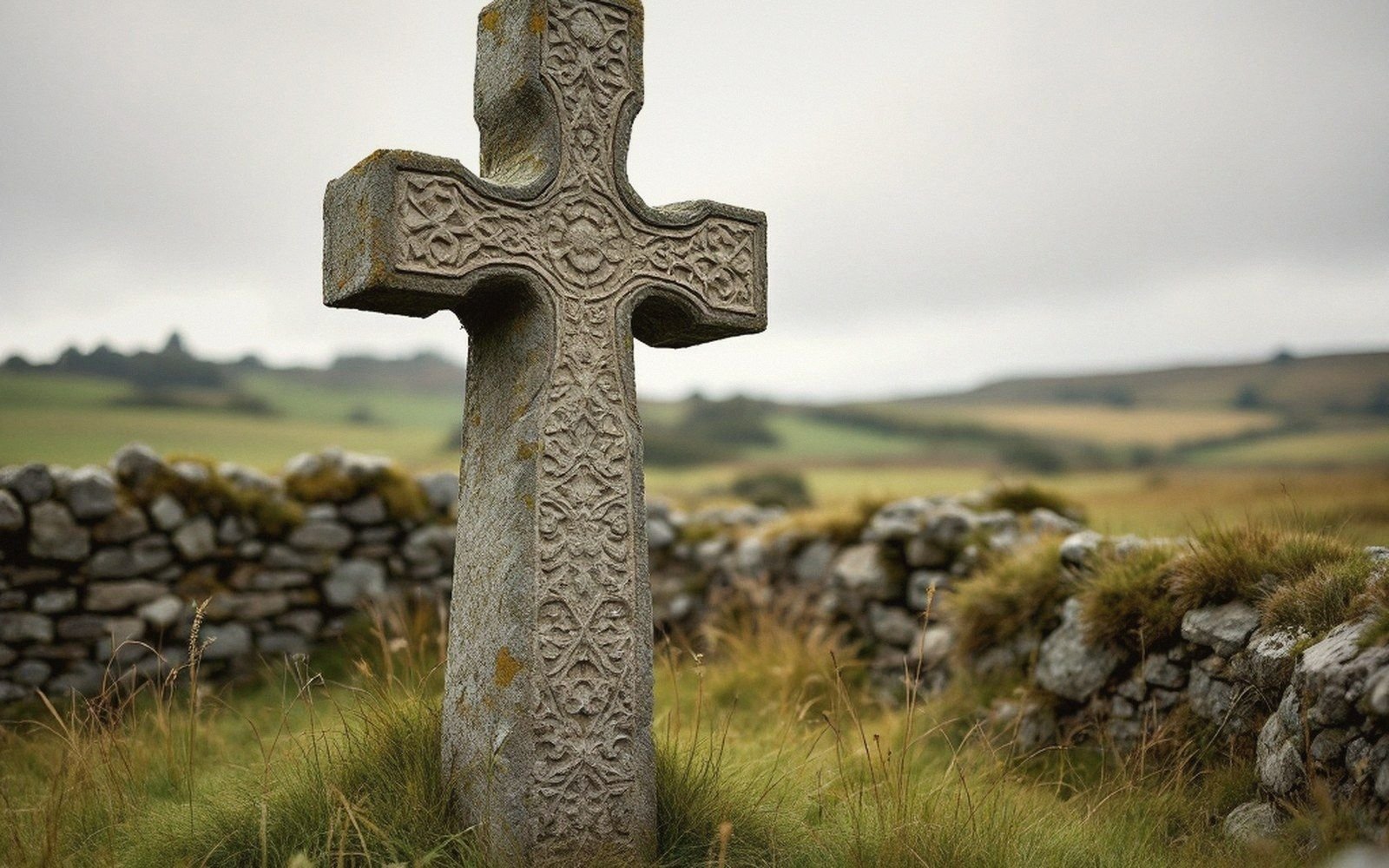
Biological fouling adds another layer. Lichen establishes within decades on any static outdoor surface, and some species actively etch stone through the excretion of organic acids. What can look like intact surface under a crust of grey or orange lichen is sometimes friable granules held only by the organism itself. Removal is not straightforward: aggressive cleaning can damage more than the lichen.
Modern responses have been mixed. A number of crosses — the Cross of the Scriptures and the South Cross at Clonmacnoise — have been moved indoors and replaced outdoors by fibreglass casts. The logic is sound: a controlled interior arrests further loss. What a museum visitor now reads is the original; what a visitor in the field reads is a copy. Neither presents the full picture of how the object once sat in its landscape, but the indoor transfer preserves the carved panels for study in ways no amount of outdoor consolidation treatment can match.
Stone types and what they do
- Sandstone — porous; susceptible to salt mobilisation and freeze-thaw; surface detail erodes fastest on exposed faces
- Granite — hard and resistant in mass but feldspar crystals decompose unevenly, blurring fine carving
- Old Red Sandstone (Ahenny group) — tightly cemented; among the better-preserved crosses for surface detail
- Lichen — can both protect and actively etch stone; removal risks damaging the surface beneath
What survives and what is lost
- West-facing panels typically most eroded; east-facing often significantly crisper on the same cross
- Indoor transfers (Clonmacnoise) arrest loss but remove the object from its landscape context
- Outdoor replacements are fibreglass casts — important for visitors reading the site