From Hide to Leaf
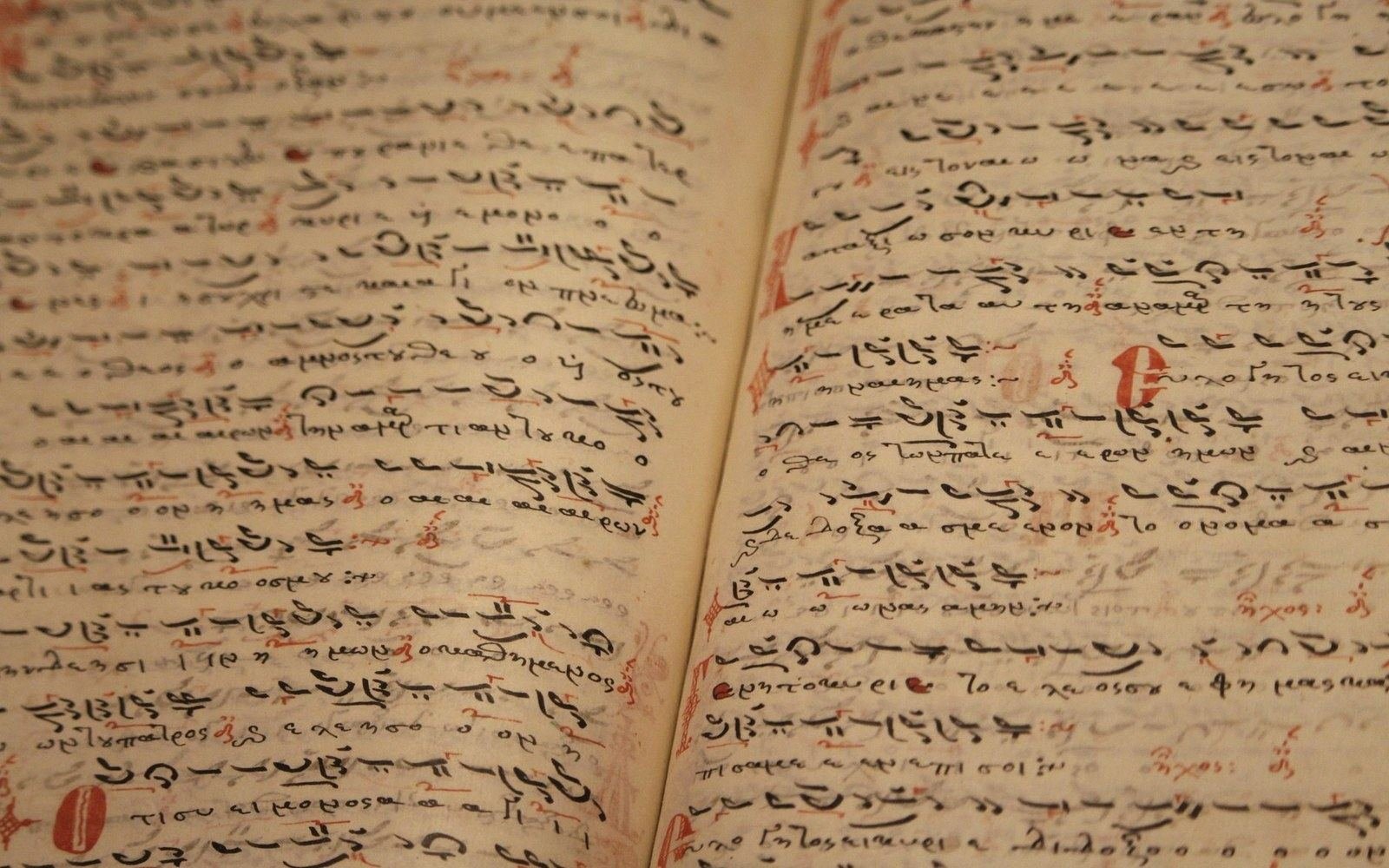
Vellum is not leather. The distinction matters: leather is tanned with plant-based compounds to stabilise it against decay; vellum is prepared by liming, scraping and drying under tension, without tanning. The result is a translucent, stiff sheet in which the collagen fibres of the dermis are locked open rather than chemically altered. It is dimensionally unstable — vellum swells and cockles with changes in humidity, as anyone who has seen a warped page in a medieval book can confirm — but it takes ink and pigment with a fidelity that no papyrus, and no early paper, could match.
The process begins with a fresh hide, most often from a calf, sometimes a sheep or goat, soaked in a lime solution to loosen the hair. Once the hair is removed and the surface cleaned, the hide is stretched on a wooden frame — a herse — while still wet, and scraped repeatedly with a lunellum, a curved blade, as it dries. The tension is the critical variable: scrape too aggressively when the hide is slack and you cut through; maintain correct tension and the drying fibres pull tight into a thin, near-uniform sheet. A skilled preparer could produce a membrane a fraction of a millimetre thick. The finest vellum used in luxury gospel books shows its quality at the edges of pages: slightly translucent, almost glassy, with the faint ghost of follicle patterning still visible on what was the hair side.
The Flesh Side and the Hair Side
Both sides of a prepared skin are usable, but they behave differently. The flesh side is smoother and takes ink more readily; the hair side retains a slight texture and is often fractionally yellower. Early medieval scribes were well aware of this. In quality manuscripts, openings are arranged so that hair side faces hair side and flesh side faces flesh side across the gutter — a convention known, after the nineteenth-century scholar Caspar René Gregory, who described it, as Gregory's Rule, though it appears to have been observed pragmatically long before it was articulated as a rule. Irregularities in Irish gospel books sometimes tell us where a quire was assembled in a hurry, or where a damaged sheet was patched in from a different animal.
The Cost in Animals
Counting the leaves in a gospel book gives an immediate sense of the material commitment involved. The Book of Kells contains around 340 leaves; the Book of Durrow roughly 248. A single calf hide, prepared with care, yields approximately two bifolios — four leaves. The arithmetic is blunt: the Book of Kells required somewhere in the region of 85 calves, the Book of Durrow perhaps 60 to 65. These are minimum figures — they assume no wastage, no spoiled sheets, no leaves lost to cutting around flaws. Actual culling and preparation would have demanded still more animals. A scriptorium producing multiple gospel books over a generation was embedded in a pastoral economy of real scale, dependent on cattle herds that were simultaneously wealth, food supply and liturgical resource.
Flaws in the vellum surface were managed rather than discarded. Holes in the original hide — from insect damage, punctures during preparation, or congenital blemishes — appear throughout surviving manuscripts. Scribes often simply wrote around them, ruling lines to either side and leaving the void in place. Occasionally a small patch of vellum was stitched or glued over a defect before writing began. These repairs are visible in raking light and under ultraviolet, and they confirm that the material was too precious to throw away even when imperfect.
The surface a scribe received was not blank in a modern sense. It carried the topology of a once-living animal: a slight curve along the spine line, variations in thickness from flank to leg, a memory of the creature's shape that even the herse and the lunellum could only partly flatten. Every gospel book opens with that fact already settled in its pages.
The arithmetic of a gospel book
- Leaves in the Book of Kells — c. 340
- Leaves in the Book of Durrow — c. 248
- Usable bifolios per calf hide — approximately 2 (= 4 leaves), assuming minimal wastage
- Calves implied by Kells — roughly 85 minimum
- Calves implied by Durrow — roughly 60–65 minimum
Key terms
- Vellum — calfskin (or sheepskin/goatskin) prepared by liming, scraping and drying under tension; distinct from leather, which is tanned
- Herse — the wooden frame on which a wet hide is stretched and dried
- Lunellum — the curved scraping blade used to thin the hide as it dries
- Flesh side / hair side — the two surfaces of a prepared skin, with different texture and ink receptivity
- Gregory's Rule — the convention of arranging facing pages so like-sided surfaces meet across a binding opening