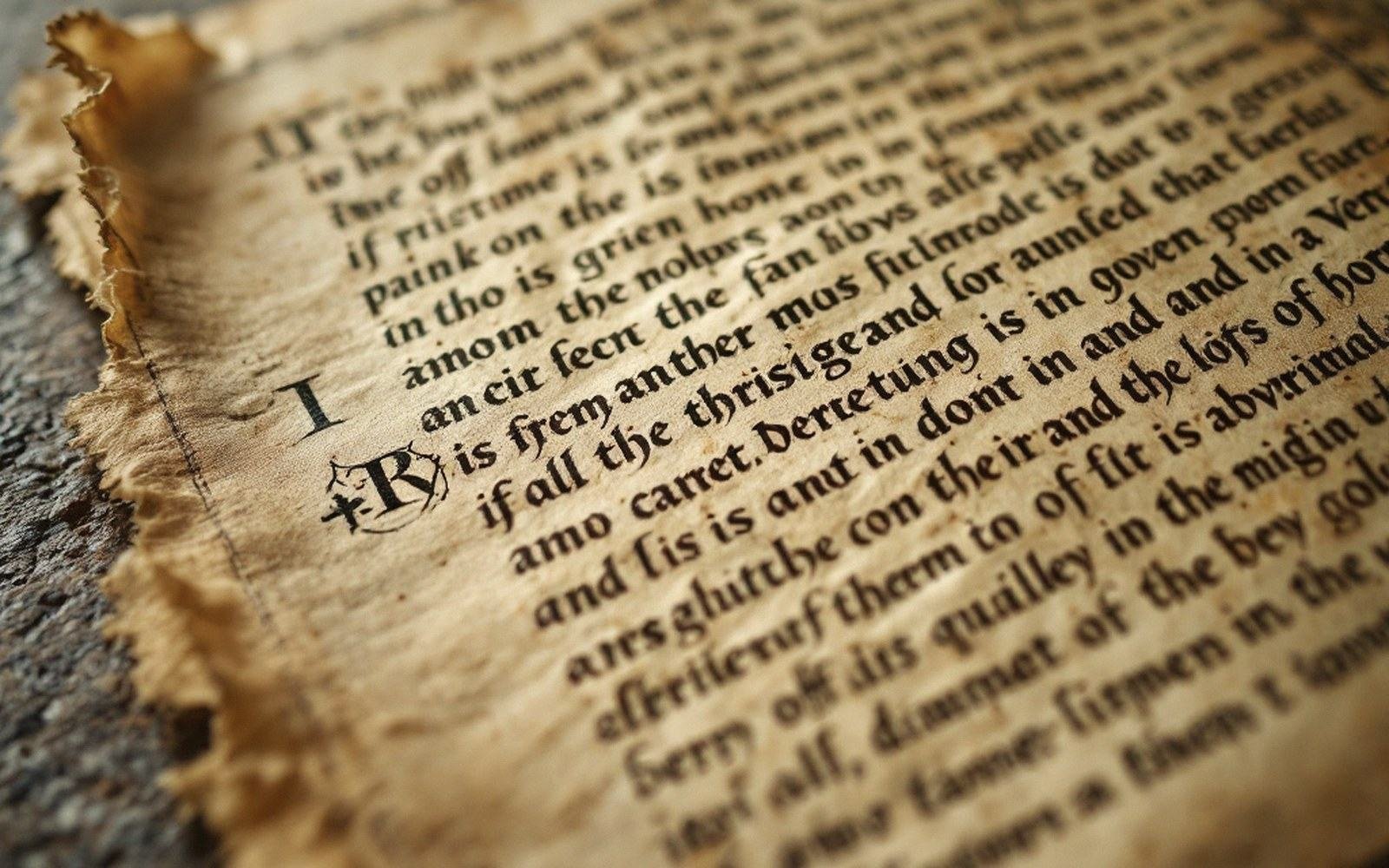
The evidence on the vellum
Copying a gospel book by hand across hundreds of skins, under poor light, for hours at a stretch, meant mistakes were inevitable. What makes the Insular manuscripts so revealing is that the corrections are still there. Erasure by pumice was the cleanest fix: the skin was scraped back and the correct letter written over. Under raking light, or in ultraviolet imaging, the ghost of the original text is often still legible. The Book of Kells shows both erasure and overwriting, sometimes by a different hand from the main scribe — suggesting a corrector worked through the completed text as a separate stage.
Where erasure was impractical, scribes used a point or stylus to expunge the wrong letter by punctuation: a dot placed beneath each letter to be ignored signalled that it should be read through. This punctum delens convention is consistent across Insular manuscripts and into continental copies made by Irish or Irish-trained scribes, which helps trace the spread of the practice. Sometimes the correct word was written above the line with a small insertion mark below — a caret-like wedge or a pair of dots — flagging exactly where it belonged.
Transposed letters got their own fix: small subscript letters, usually b and p (abbreviations for sub and post), written beneath adjacent characters to indicate their correct order. This is a borrowing from late antique correcting conventions, and its presence in Insular books is one thread in the argument that the scriptoria were not isolated but working within a literate Latin tradition inherited from late Roman Gaul and Britain.

Omissions at line endings — one of the commonest slips — were caught and added in the margin, sometimes with a mark in the text pointing to where they fell. In the Book of Armagh, marginal corrections in what appears to be a contemporary hand sit alongside the main text, already part of the object's first life rather than later annotation. The correction is not failure; it is the record of someone reading carefully.
The correcting toolkit
- Pumice erasure — scraping the vellum surface to remove ink and rewrite; traces often visible under UV or raking light
- Punctum delens — a dot placed beneath each letter to be deleted, signalling the reader to skip it
- Supra-linear insertion — correct text written above the line with a wedge or dot mark below indicating placement
- Letter-order marks — subscript b and p (sub/post) placed under transposed letters to give their correct sequence
- Marginal addition — omitted text written in the margin with a pointer mark in the body of the text